

Rising temperatures, long road trips, beach days, and outdoor adventures are part of the Australian travel lifestyle, but they also pose serious risks to our pets.
Researchers from UNSW Sydney have found a rise of 10% in the risk of death for dogs during extreme hot days (days with temperatures above 32°C).

Heatstroke occurs when a dog’s body temperature rises beyond safe levels and their natural cooling mechanisms can no longer cope.
Understanding dog heatstroke symptoms, knowing what to do in an emergency, and learning how to prevent heatstroke are essential skills for every Australian pet owner.
What is Heatstroke in Dogs?
While people sweat through the skin, dogs have sweat glands only in their paw pads and around the nose. Their primary method of cooling is panting, which allows heat to escape through evaporation from the tongue and airways.
Heatstroke in dogs occurs when the body’s core temperature rises above safe limits and the dog can no longer cool itself. While normal canine body temperature is around 37.7–39.8°C, problems begin once temperatures climb above 40°C.
At this point, proteins within cells start to break down, blood flow to vital organs is reduced, and inflammation can spread throughout the body.
One of the most dangerous aspects of heatstroke in dogs is how quickly it can develop. In extreme conditions, such as being left in a hot car or intense physical activities on a warm day, heatstroke can occur in just several minutes. This makes prevention critical.
Heat Stress
Heat stress is the earliest stage of heat-related illness and signals that a dog is beginning to struggle with temperature regulation. At this stage, dogs are usually still alert and responsive. To help prevent progression, dogs should have immediate rest in a shaded, well-ventilated area, access to water, and gentle cooling.
Heat Exhaustion
Heat exhaustion occurs when a dog’s cooling mechanisms are overwhelmed and symptoms become more pronounced. At this stage, it may be best to already seek veterinary attention, as heat exhaustion can rapidly progress to heatstroke without prompt intervention and medical care.
Heatstroke
Heatstroke is the most severe and life-threatening stage of heat-related illness in dogs. At its worst, it can lead to neurological dysfunction and organ failure.
Common causes of Dog Heatstroke
Heatstroke in dogs rarely happens by accident; it is usually linked to common and preventable situations:
- Being in the car
Leaving a dog in a parked car is one of the most frequent and deadly causes. Even with windows cracked or on mild days, temperatures inside a vehicle can rise rapidly, reaching dangerous heat levels in short periods.
Even on long drives, dogs have little to no shade or ventilation within the vehicle or during rest stops. Trapped heat, a lack of airflow, and anxiety or excitement can quickly push a dog into heat stress.
- Physical outdoor activity in hot weather
Walking, running, or playing during the middle of the day, especially in humid conditions, can overwhelm a dog’s cooling ability, even during relatively short periods of activity.
- Direct sun on beach days
Aside from the direct sun, the sand also reflects heat, and dogs often overexert themselves with excitement. Saltwater ingestion can also worsen dehydration (and is dangerous in itself).
- Being kept in the backyard
Dogs that are left outdoors in the yard without adequate shade, on hot concrete, or with scarce water sources are at risk even if they are at home.
Breed-specific or age-related risks
Certain breeds may be predisposed to respiratory issues because of compromised airways, while other breeds that have thicker or longer coats may also struggle to cool themselves efficiently.
These dogs can also be more vulnerable to heatstroke and may require extra care:
- Senior dogs: Reduced cardiovascular and respiratory function
- Puppies: Immature temperature regulation
- Overweight dogs: Insulation from fat increases heat retention
- Dogs with heart or respiratory conditions: Reduced tolerance to heat
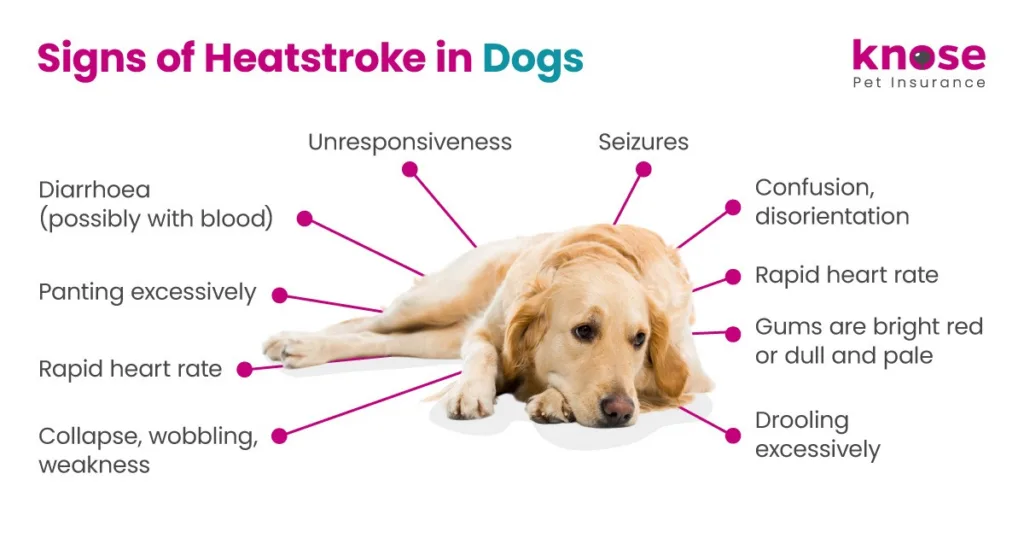
Signs of Heatstroke in Dogs
Recognising dog heatstroke symptoms early can save your dog’s life. Symptoms typically progress rapidly and can be grouped into early and severe stages.
Early symptoms
- Excessive or frantic panting
- Thick drooling or saliva
- Bright red gums or tongue
- Restlessness or agitation
- Weakness or slowing down
- Seeking shade or refusing to walk
Severe symptoms
- Vomiting or diarrhoea (sometimes with blood)
- Collapse or inability to stand
- Confusion, disorientation, or wobbling
- Seizures
- Unresponsiveness
- Rapid heart rate
❗️If severe symptoms appear, heatstroke is already advanced and requires urgent veterinary attention.
What to do if your dog is showing signs of Heatstroke
Heatstroke in dogs is a medical emergency. Always seek direction from your veterinary professionals.
Step 1: Move to a cool area immediately
Get your dog out of the heat and into shade or a cooler air-conditioned space.
Step 2: Offer small sips of water
Provide cool water but not icy. Do not force your dog to drink as this can cause choking.
Step 3: Begin gradual cooling
- Apply cool, wet towels to the neck, belly, and paws
- Use a fan to enhance evaporative cooling if available
❗️Do not use ice baths. Rapid cooling can constrict blood vessels and worsen internal damage.
Step 4: Contact professional help
Call your trusted vet or an emergency veterinary clinic immediately. If you are insured with Knose and are unsure of what to do, the Knose Pet Health Hotline can provide guidance 24/7.
Step 5: Monitor closely while transporting
Pay attention to your dog’s breathing, gum colour, and alertness on the way to the vet. Even if symptoms improve, veterinary assessment is still essential.
Heatstroke prevention tips for Aussie pet-owners
Prevention is the most effective way to protect against heatstroke in dogs. This is especially important during Australia’s hot and dry months.
General summer & dry-season tips
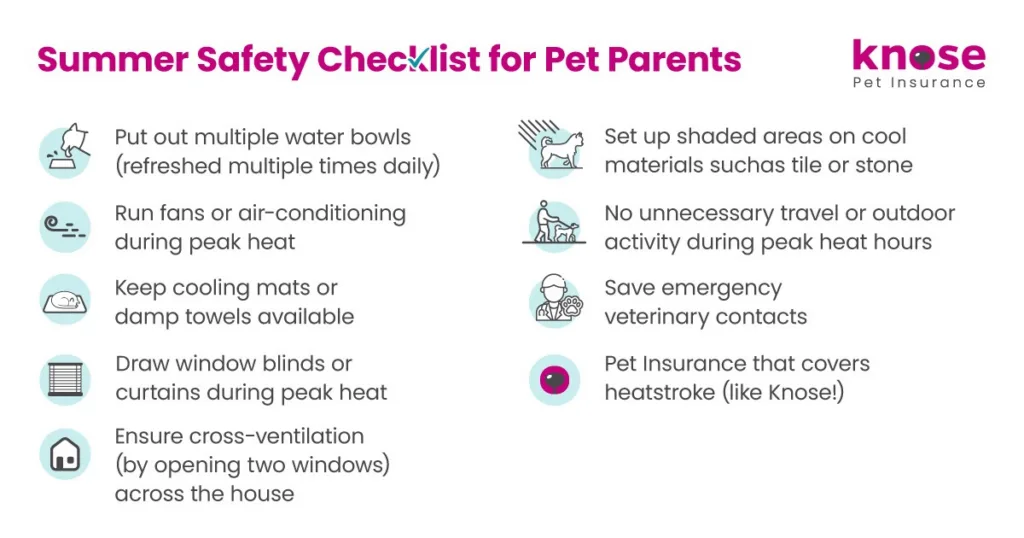
- Avoid exercise during peak hot hours of the day, take walks only in the early morning or late afternoon
- Always carry enough water and keep multiple sources of water around
- Ensure constant access to shade at home and outdoors
- Use cooling mats, damp towels, or fans
- Adjust activity levels based on breed, age, and fitness
Travel & road trip safety
- Never leave your dog in a parked car
- Plan pet-friendly stops with shade and water
- Keep vehicles well-ventilated and use sunshades
- Secure dogs safely while ensuring airflow
Beach, camping & outdoor activities
- Test ground temperature with your hand before letting your dog walk on paved roads
- Watch for signs of overexcitement and fatigue
- Schedule regular cool-down breaks
- Bring portable shade such as umbrellas or tents
- Rinse off salt and sand to prevent dehydration and irritation
Diagnosing Heatstroke in Dogs
Take note of symptoms and get your pet records ready to help your vet know more about your dog’s condition. Heatstroke in dogs is typically diagnosed based on:
- A history of heat exposure (e.g., car, exercise, hot environment)
- Clinical signs such as excessive panting or drooling, collapse, or neurological changes
- Elevated body temperature (often above 40–41°C at presentation at the vet)
Veterinarians can perform a full assessment with physical examination, blood tests and urinalysis to assess dehydration, organ function, clotting ability, and internal damage.
Even if cooling has already begun and temperature appears normal, monitoring is critical to prevent complications such as hypothermia or delayed organ failure.
Dog Heatstroke Treatment
Heatstroke in dogs requires hospitalisation and intensive supportive care. Treatment may include:
- Controlled emergency cooling
- Intravenous fluids to treat dehydration and shock
- Oxygen therapy for breathing difficulties
- Medications to control vomiting, diarrhoea, seizures, or brain swelling
- Antibiotics to prevent secondary infection
- Blood or plasma transfusions if clotting abnormalities occur
Veterinary teams closely monitor temperature, heart rate, respiratory effort, blood pressure, and organ function. Severe cases may require intensive care and extended hospital stays.
Dog Heatstroke Recovery
A dog’s recovery from heatstroke can depend on these factors:
- How high the dog’s body temperature rose
- How long the dog was overheated
- How quickly treatment began
- How first-aid treatment was provided
Dogs that survive the first 24 hours generally have a good chance of recovery, though hospitalisation for two to three days can be common. Most dogs can make a full recovery with rest and follow-up care.
Your vet may recommend repeat blood tests one to two weeks after discharge to ensure organs are functioning normally. Dogs that have experienced heatstroke may be at higher risk of future episodes and require extra precautions in warm weather.
How Knose keeps pet safe
Unexpected emergencies like heatstroke can be emotionally and financially stressful. Knose supports pet owners with pet insurance that has flexible coverage options and access to emergency care support.
The Knose 24/7 Pet Health Hotline offers immediate advice when you are unsure what to do and this support allows Aussie pet owners to act quickly and confidently when every minute counts.
Knose’s mission is to help Australians fully enjoy life with their pets throughout every season, while knowing support is always available.
Frequently Asked Questions
- How do I tell if my dog is experiencing Heatstroke?
Check out the Early Warning Signs of Heatstroke section of this article. Dogs often show signs such as excessive panting, drooling, bright red gums, weakness, vomiting, collapse, or confusion, especially after heat exposure.
- How do you treat a dog with Heatstroke?
Professional veterinarians will assess treatment plans based on the dog’s state. Generally, methods for immediate cooling are required. This may include intravenous fluids, oxygen, medications, and close monitoring.
- What are the three stages of heat exhaustion in dogs?
- Heat stress: Panting, thirst, lethargy
- Heat exhaustion: Weakness, vomiting, collapse
- Heatstroke: Seizures, organ failure, shock
- How long does a Heatstroke last for dogs?
It depends on the case but symptoms can progress in minutes. Recovery may take days or weeks, depending on severity and treatment speed.
- Can Heatstroke in dogs be treated at home?
Not necessarily. While cooling measures should begin immediately, seeking veterinary care during heatstrokes is both essential and critical.
- How do dogs act when they are overheated?
When dogs are feeling too hot, they often seek shade and water, pant heavily, appear tired, and may refuse to move.
Disclaimer
This article provides general educational information only and does not constitute veterinary or medical advice. Every cat’s health situation is unique. Always consult a qualified veterinarian for diagnosis, treatment, and emergency care. If you suspect your cat is experiencing heatstroke or heat exhaustion, contact a veterinarian or emergency animal hospital immediately.
Terms, conditions, limits, and exclusions apply. See the Product Disclosure Statement (PDS) and Target Market Determination (TMD) at knose.com.au. Distributor – Knose.com.au Pty Ltd (ABN 70 680 822 986, AR 1311940), AFSL holder – ThePetInsuranceCompany.com.au Pty Ltd (ABN 38 620 795 735, AFSL 536651). Issued by Insurer – Pacific International Insurance Pty Ltd (ABN 83 169 311 193, AFSL 523921). Any advice is general only and does not take into account your objectives, financial situation, or needs.
Post by Knose Pet Insurance in collaboration with Marie Boncan
