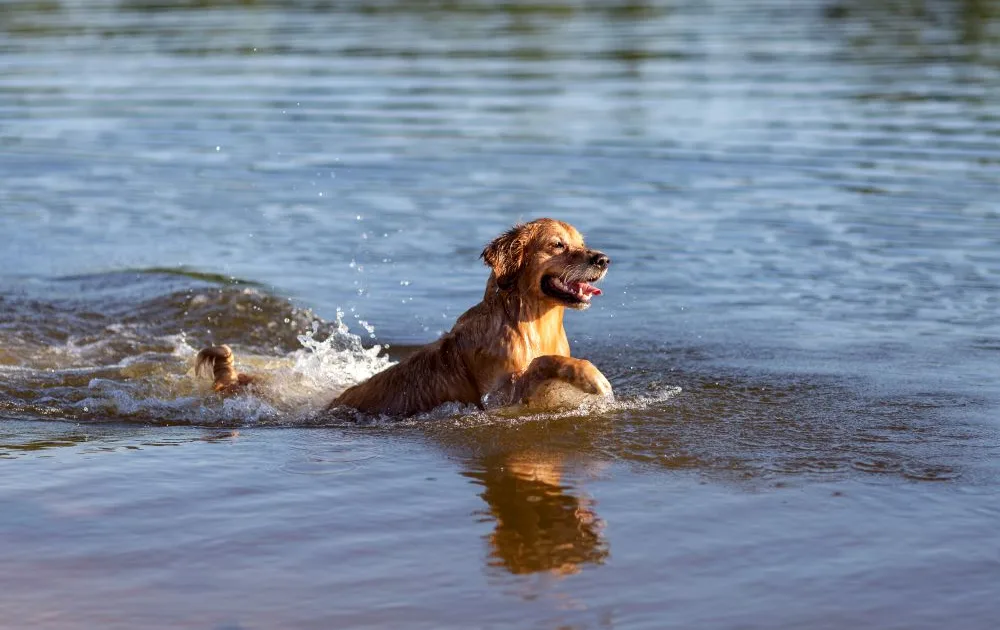

While many dogs love to enjoy water, not all are built for long swims or rough conditions. Some dog breeds may face more struggles due to their body types, particularly their short legs. Among these are the Bulldogs, Pugs, Bull Terriers, and Basset Hounds.
Meanwhile, more “adventurous” dogs, like the Retrievers and Portuguese Water Dogs, might also need more attention, as their excitement may push them sprinting across waters, swallow seawater, or rush into unsafe water conditions.
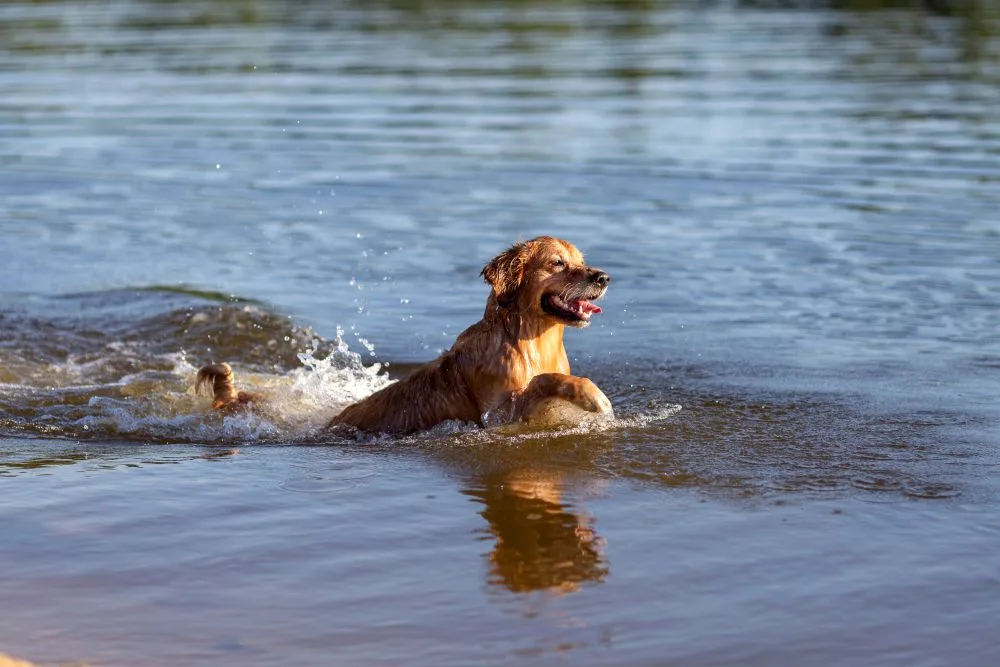
Playing fetch in the water is a fun bonding activity when you do it safely.
To keep your seaside adventures stress-free, it’s important to understand how to keep your dog safe around water. This guide covers the essentials of water safety for dogs in Australia. Remember: Your veterinarian is always the best source of expert advice!
Can my dog swim?
If it’s your pup’s first time in the water, or if you haven’t been to the beach with them in a long time, here’s what you need to consider:
- Level of fitness – be more cautious if your dog is old, overweight, brachycephalic, or has heart/airway issues.
- Humidity – beware of too much heat, hot sand, or limited shade near the beach or river.
- Experience with water – even if your dog already knows how to swim, make sure that they also know how to get out of the water safely.
Where can my dog swim safely?
The next step is choosing the right place to swim.
Pet-friendly Australian beaches
If you’re gearing for a beach trip during the summer, keep the following in mind:
Choose patrolled beaches
After scouting for life guards on the sands, check for red-and-yellow flags in the water too. These mark the safest swimming areas, helping both you and your pet stay within safe zones and avoid possible water hazards.
Watch out for rip currents
If you spot a channel of fast moving. choppy water on the surface, steer clear of the ocean. These rips can quickly drag both humans and pets, so best to avoid them by staying away from rocks, piers, and groynes where rip currents are more likely to form.
Follow warning signs
Safety and warning signs are usually all over the beach. Reading and following these must be non-negotiable for a safe and memorable experience with your dog.
Inland waters in Australia
Rivers, creeks, lakes, and dams can also be fun for dogs, as long as these important safety factors are considered:
Conditions can change hourly
A river that looks safe earlier in the day can quickly become dangerous as water levels rise. When it rains, a calm lake may also turn into a fast-moving water with little warning. During these times, it’s best to put on a life jacket for your dog and keep watch.
Beware of hidden hazards
There can be submerged rocks, branches, or even fishing lines. These hazards can catch dogs by surprise, so always choose familiar, low-risk areas when you let your dog near inland waters.
Water quality alerts
Wherever you go, watch out for signs of algae in the water, as harmful algal blooms can threaten both humans and animals alike.
- Discoloured water – When they grow out of control, colonies of algae can turn water into shades of green, brown, and even red.
- Surface scums – Thick, paint-like streaks on the surface of the water caused by an algal bloom can cause skin irritation and illness upon contact with people, pets, and wildlife.
- Musty odour – Strong, earthy smell is a common sign of algae in water, which produces toxins that cause rashes, stomach aches, or even liver and kidney damage.
- Foam at the coast – Coastal foam can be caused by a high concentration of decomposing organic matter, including dead plankton or algae.
Northern “Croc Country” 🐊
If you happen to cross Queensland, keep in mind that crocodile habitat starts around Gladstone and extends North. Crocodiles can be present in the waters, and they can be invisible until it’s too late.
In the Northern Territory, government advice is clear: crocodiles are dangerous, and both people and pets should never take unnecessary risks in a croc habitat.
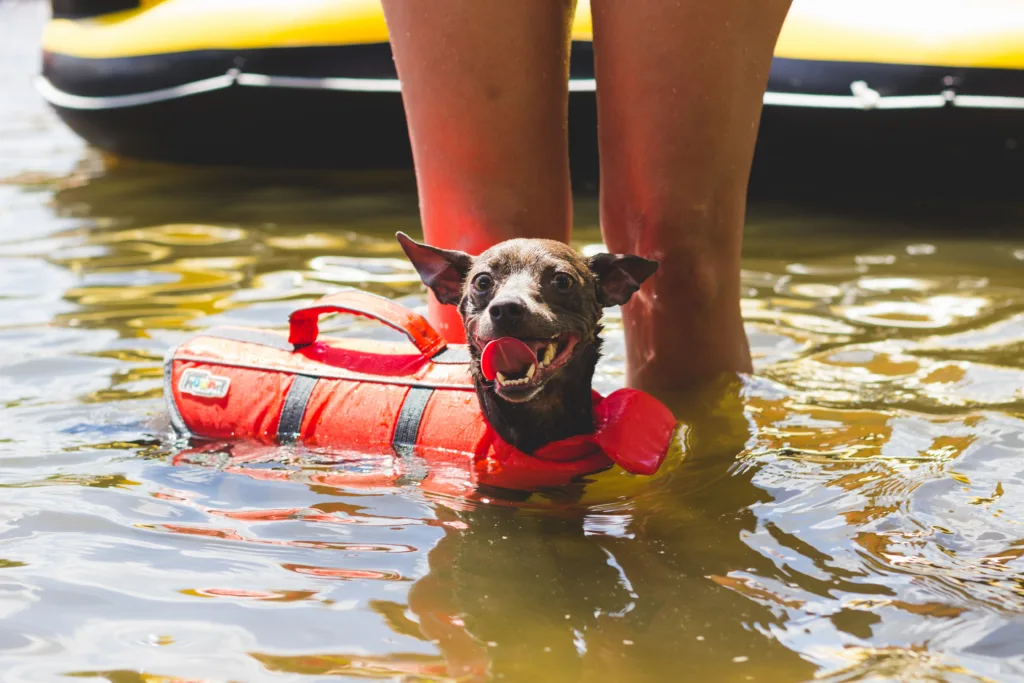
The key to adventuring safely is to always pack dog-friendly things
What should I bring for a trip with my dog?
When going with your dog to a water trip, don’t forget the following:
- Fitted life jacket – important for boating, stand up paddleboarding (SUP), long-distance swims, and fast rivers
- Fresh drinking water and bowl – to prevent your dog from drinking saltwater, lake water, or random puddles, which can upset their stomach
- Appropriate leashes – new environment and huge water bodies mean lots of distractions and the urge to run around
- Clear exit plan – always look for ramps, paved ways, and exit signs
- Post-water basics – towels, fresh water for rinsing, and basic grooming supplies
How do I keep my dogs safe while playing?
Some routines are too important to leave at home, especially when it comes to the safety of your pets.
- Eyes on your pets – dogs near pools and open water edges require constant supervision as the tides can be unpredictable
- Have a break – to reduce the risk of your dogs gulping too much water, encourage breaks every 10-15 minutes during intense water plays
- Choose the right toys – if you’ll be bringing toys, choose smaller floating objects to help them avoid drinking too much salt water while playing
Watch for signs of fatigue – slower movements and heavy panting can be signs that your dog needs a break from the water fun.
What does a dog emergency look like?
Here are some examples that can help you know if your dog needs help:
- After water play: if your dog starts vomiting, seems unusually sluggish, or shows prolonged fatigue after intense water play, it could be a sign of water intoxication.
- After beach time:– If your dog begins vomiting or develops diarrhea after a trip to the beach, it could be a sign of salt poisoning. While salt toxicosis has historically been more common in livestock, there are increasing reports of acute salt toxicity in dogs following heavy seawater ingestion during beach play.
- After mouthing marine creatures: If your dog mouths a marine creature such as a bluebottle and then develops sudden mouth pain, excessive drooling, swelling, or difficulty breathing, treat it as a potential medical emergency. The toxins from these organisms can be absorbed quickly, and symptoms may worsen rapidly.
- After hot, sunny outings: When it gets too hot for your dog, overheating may progress from dehydration to life-threatening heatstroke. Move your dog to a cool, shaded, or air-conditioned area right away. Avoid ice baths, as extreme cold after too much heat can worsen complications. Read the full guide on heatstrokes in dogs.
- After suspected blue‑green algae exposure: If your dog is suspected of being exposed to blue-green algae, act immediately. Bathe them with fresh, clean water, and ensure that they do not lick their bodies prior to washing.
To avoid these kinds of situations, supervise your dog closely and monitor for any changes in behaviour. If you suspect poisoning at any time, contact your nearest veterinarian immediately for urgent guidance.
Useful water safety information for dogs
There are many ways to ensure that you’re prepared for the ultimate beach getaway with your fur buddies. You can check the following articles for further reading.
- Royal Life Saving Society-Australia’s Stay Safe & Active page provides useful information on swimming benefits, those most at risk of drowning, and what signs to look out for as an alert for specific hazards.
- Bass Coast Shire Council partners with Life Saving Victoria to provide lifesaving tips, ways to spot a rip current, managing the rip current, rock fishing safety, and other beach safety tips.
- VISCES supports coastal safety and provides emergency assistance during floods, storms, and landslides, as well as comprehensive safety guidelines for when storms, floods, and emergencies occur.
- You can also download the Beachsafe app on your mobile devices to be informed of the beach conditions.
Exploring Australian waters, the safe way
Water adventures with your dog can be some of the most memorable memories you’ll make, especially under the Australian sun. But behind every carefree dip should be careful planning and understanding the risks that come with the fun of the water.
Having the right support in place can also help you focus on fun while being prepared for possible unexpected situations. Knose Pet Insurance offers extensive coverage and inclusions, trusted to protect pets since 2019.
With the right preparation and precaution, your dog can safely enjoy the wonders that Australian waters can offer!
