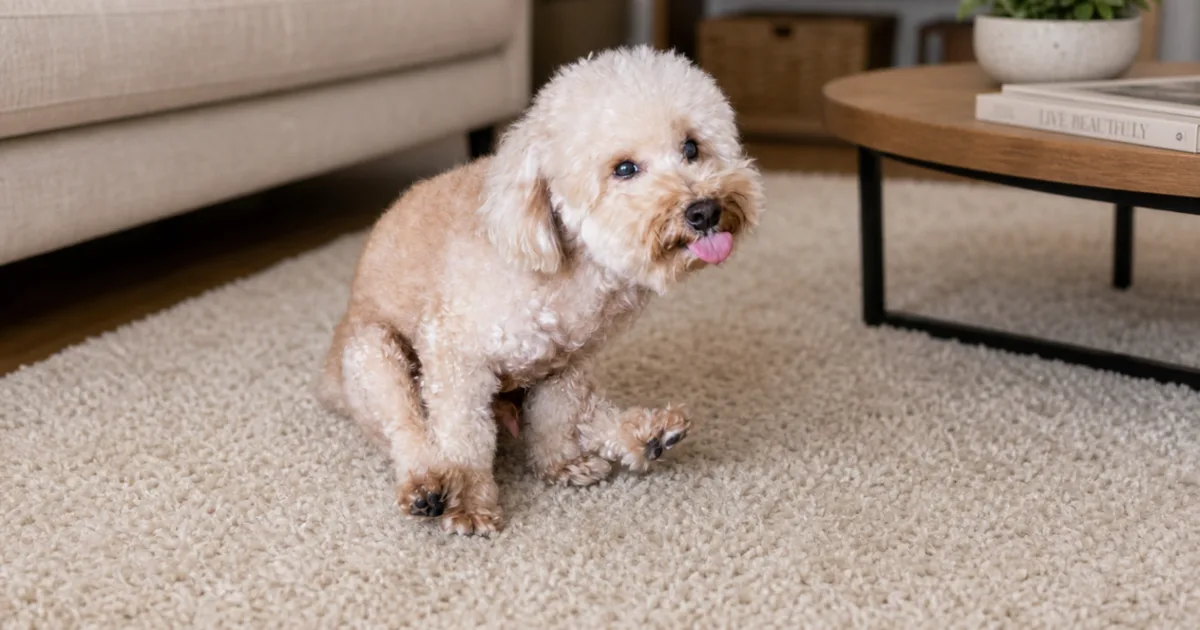

If you’ve ever seen your pet dragging their bottom across the floor, you’re probably wondering two things: “What is my pet doing?” and “Should I be worried?”.
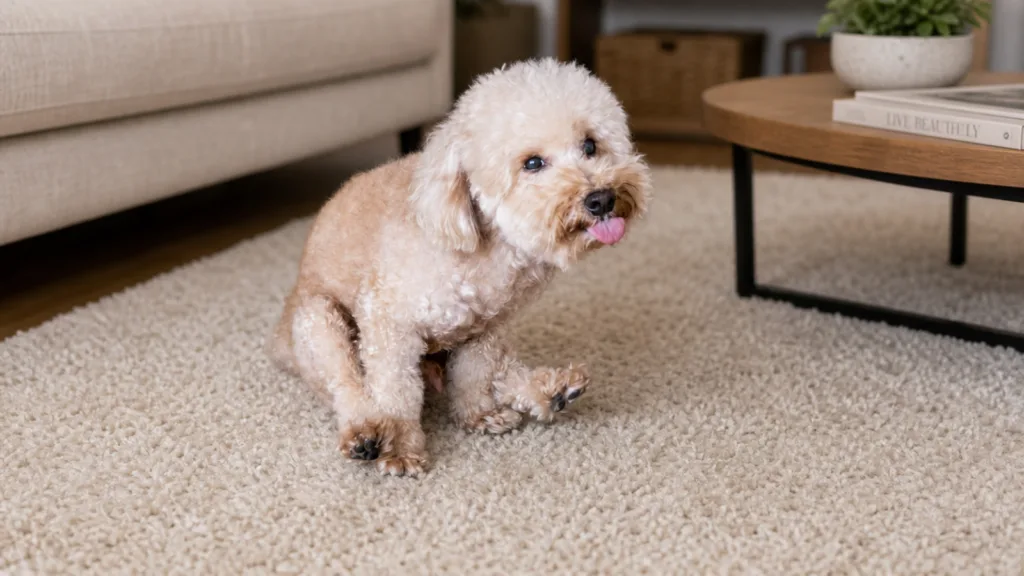
If your first reaction is to giggle at your pet for being silly, you’re not alone. Scooting is a common behaviour in dogs and cats. While it might look a little funny, it’s often a sign that something around your pet’s bottom feels uncomfortable.
What does scooting mean?
Scooting is when a pet drags their bottom along the floor, carpet, grass or another surface. It usually means there is irritation, itchiness, pressure or discomfort around the anal or rectal area.
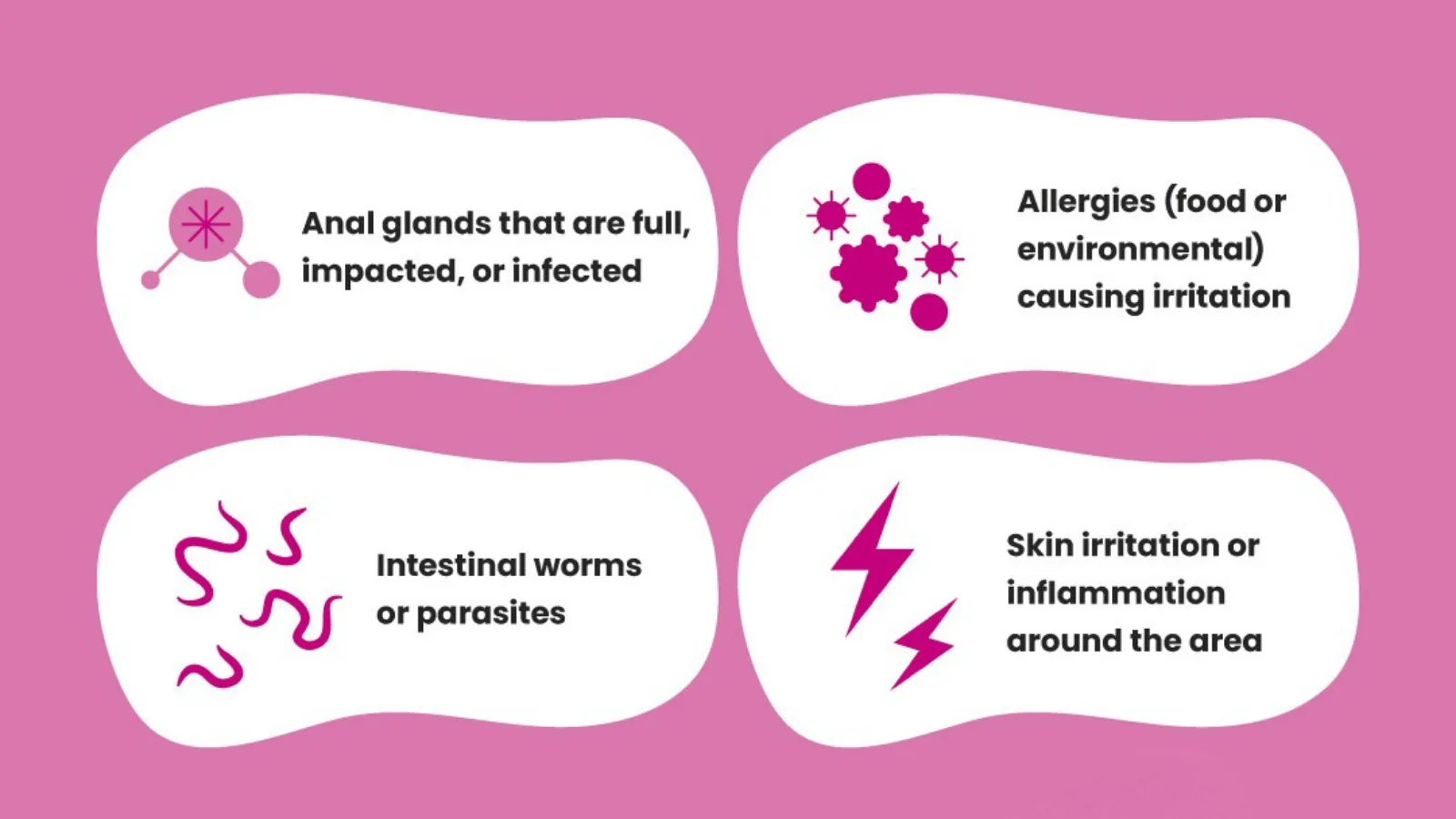
Anal gland issues are usually the common cause but they’re not the only possible reason. Scooting can also be linked to:
- Worms or other parasites
- Allergies
- Skin irritation
- Grooming irritation
- Rectal or perianal discomfort
- Inflammation around the anus
If scooting happens once and your pet seems otherwise normal, it may not be an emergency. But if it continues, happens repeatedly or comes with other symptoms, it’s best to book a vet appointment.
What are anal glands?
Anal glands, also called anal sacs, are two small sacs located inside your pet’s anus present in both dogs and cats. They are located roughly at the 4 and 8 o’clock positions.
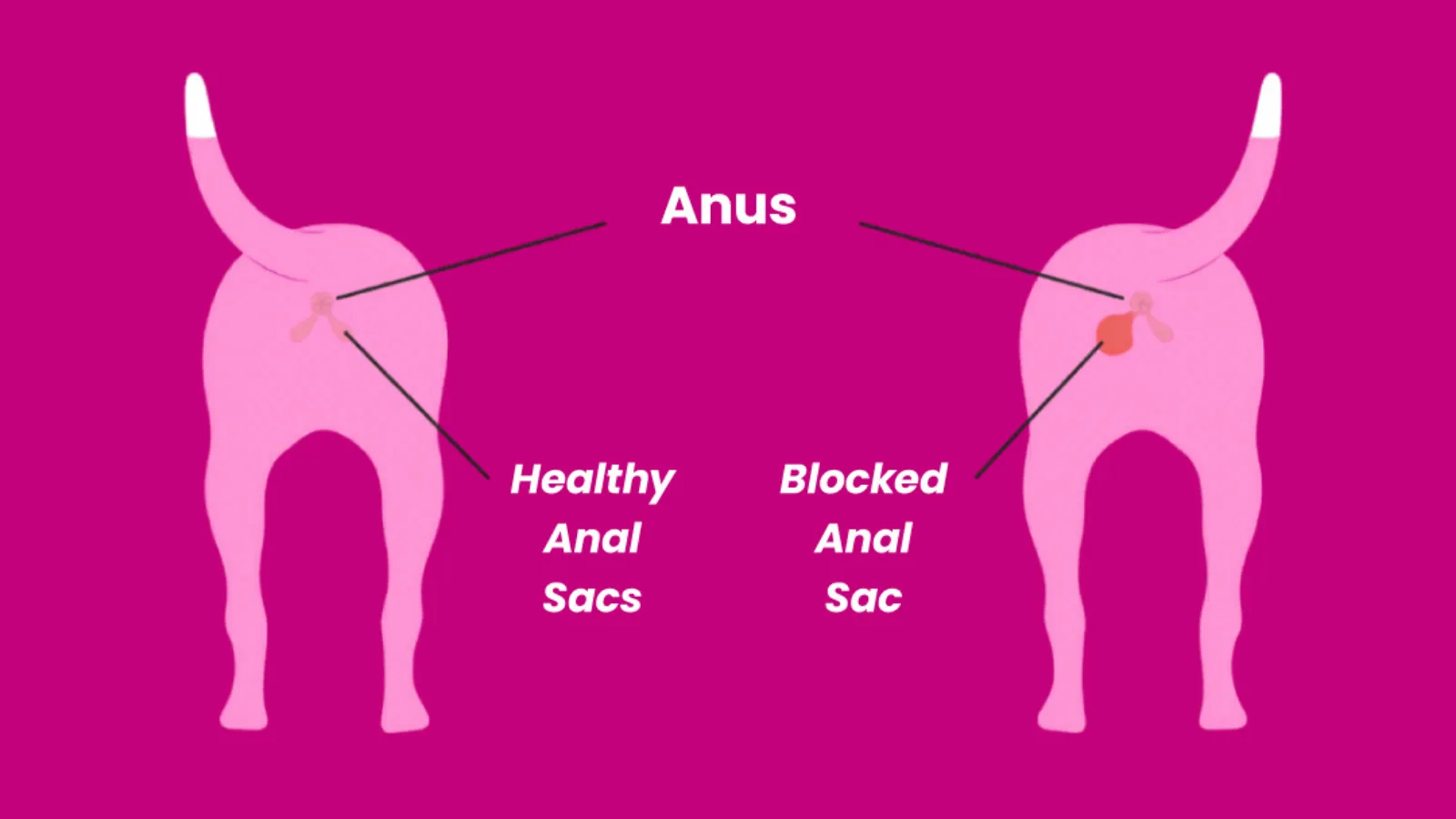
These glands produce a strong-smelling fluid that plays a role in scent marking. Every pet’s anal gland secretion is unique, which is one reason animals are so interested in sniffing each other’s rear ends.
Normally, anal glands empty naturally when your pet passes a firm stool. The pressure of the bowel movement helps express the fluid from the sacs. Problems can happen when the glands don’t empty properly. Most anal gland problems are treatable, especially when they’re noticed early.
Common signs of anal gland problems in dogs and cats
Scooting is often the most obvious sign, but pets with anal gland problems may show other several signs of discomfort.
Watch out for:
- Dragging or scooting their bottom on the floor
- Excessive licking or chewing near the anus or base of the tail
- A fishy or foul odour
- Redness, swelling or tenderness near the anus
- Straining or discomfort when passing stools
- Whimpering, yelping or seeming uncomfortable when sitting down
- Sudden attention to the rear end
- Discharge, blood or a visible wound near the anus
❗If you notice swelling, bleeding, pus, severe pain or a wound, contact your vet promptly.
Types of anal gland problems
Anal gland problems are broadly known as anal sac disease. These are conditions affecting anal glands and can range from mild discomfort to painful infections.
Impaction
Impaction is one of the most common anal gland problems. It happens when the anal glands become full, blocked or difficult to empty. The fluid inside may thicken, making it harder for the glands to express naturally. If you suspect this is occurring, contact your veterinarian.
Infection
If blocked glands are not relieved, bacteria can build up and cause infection. The area may become swollen, painful and inflamed. At this stage, your pet may need veterinary treatment. A vet may express the glands, check for infection and prescribe medication if needed.
Abscess
An infected anal gland can develop into an abscess. This is a painful pocket of infection that may eventually rupture, creating a wound near the anus. An abscess can cause swelling, bleeding, pus, a strong smell, obvious pain or your pet to suddenly become distressed.
Tumours
Anal glands tumours are uncommon but may occur. Any lump, swelling or persistent change around your pet’s anus should be checked by a vet. It may not cause your pet pain in the early stages but it’s always better to investigate early than to assume it’s just a simple problem.
Why do some pets get anal gland problems more than others?
In a study by the Royal Veterinary College, out of 104,212 dogs, 4.4% had anal sac disorders, with the most common type being impaction.
Some pets are more prone to anal gland issues than others. Toy breeds such as Chihuahuas or Cavalier King Charles Spaniels are often associated with anal gland problems because of their small size. Other breeds that have a known risk for anal sac disorders are:
- Shih Tzu
- Dachshund
- Miniature poodles
- French bulldogs
- Beagles
While less common, anal gland disorders in cats can also occur. Although rare, anal gland cancer is suspected to have a genetic component in Siamese or Burmese breeds.
There are higher risks if the pet has conditions of obesity, chronic diarrhoea or constipation, allergies, or bowel issues. Older pets are also at risk due to their weaker muscle tone and irregular bowel movements.
💡Anal gland problems are not necessarily a sign that you’ve done anything wrong. Some pets are just more likely to have them.
What should you do if your dog or cat is scooting?
If your pet is scooting, start by calmly observing them for any signs of anal gland problems. Do not try to treat the area yourself. Instead, book a vet appointment if you are unsure or notice any warning signs.
Seek urgent veterinary care if there is bleeding, pus, a visible wound, severe pain, a swollen lump. While it is good to be informed about your pet’s anal gland health, this condition should not be treated at home without any veterinary support.
How are anal gland problems treated?
Treatment depends on what’s causing the problem and how severe it is.
Examination and Diagnosis
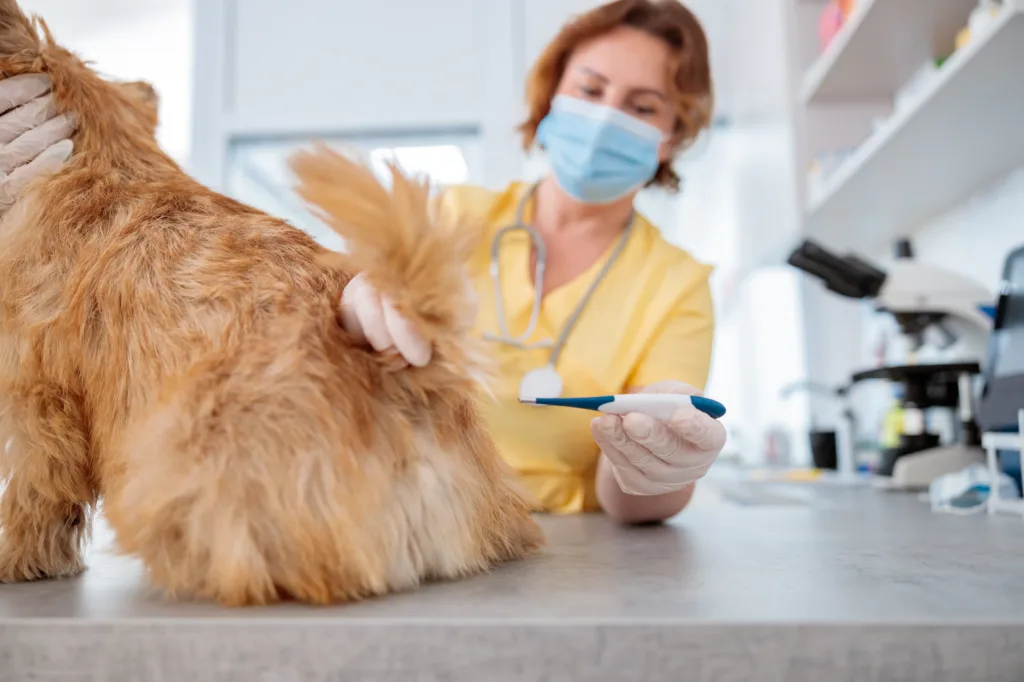
Your vet will examine your pet’s rear end and check for signs of anal gland problems. They may also gently feel the anal glands to see if they are full, blocked, infected or painful. In some cases, your vet may check for other causes of scooting too.
This can include looking for signs of worms, allergies, skin irritation, diarrhoea, constipation or other rectal or perianal issues. If there is a lump, unusual swelling or recurring problem, your vet may recommend further testing.
Treatment
Manual expression
If the glands are impacted, a vet or vet nurse may manually express them to empty the fluid safely. This can help relieve pressure and discomfort when the glands are full or blocked.
Medications
If there is infection or inflammation, your vet may recommend medications such as antibiotics, anti-inflammatories or pain relief. If an abscess has formed, it may need drainage, cleaning and further treatment to help the area heal.
Surgery
In chronic or severe cases, surgery may be considered. Surgical removal of the anal sacs, called anal sacculectomy, is usually reserved for pets with serious or recurring problems where other treatment options have not been enough.
Management
After the immediate problem is treated, your vet may suggest ways to reduce the chance of it happening again. This can include diet changes, weight management and treating any underlying issues such as allergies, soft stools or digestive problems.
These should be discussed with your vet, especially if your pet has allergies, digestive issues or other health conditions.
💡Anal gland issues can sometimes mean repeated vet visits, medication or interventions, this is exactly the kind of unexpected health problem where pet insurance can help.
Can anal gland problems be prevented?
Not all anal gland problems can be prevented, but there are steps that may help reduce the risk.
Supporting healthy digestion
Firm, regular stools can help the glands empty naturally. Providing your pet with a balanced diet, speaking to your vet before adding fibre, and addressing ongoing digestive issues can all help.
Weight management
Keeping your pet at a healthy weight and providing an active lifestyle can support their overall health and may reduce the risk of anal gland impaction.
Regular vet checks
Your vet can monitor recurring issues, check for other causes of scooting and help you manage related problems such as allergies or soft stools.
How pet insurance can help with anal gland issues
Cases for anal gland problems are all different, so treatment costs can vary widely depending on the condition and the care that your pet needs. This is where pet insurance can help you focus on getting your pet the right care without feeling as worried about the bill.
Knose offers pet owners the choice of a flexible coverage to suit their pet and budget. So that if your pet starts scooting, you don’t need to panic and you also don’t need to guess. You can calmly bring your pet to the vet who can help identify any health issues and recommend the right treatment. Alternative products like the Pet Care Plan can also help you feel more prepared for routine and preventative care.
Scooting is common and can happen in both dogs and cats. Understanding your pet’s normal behaviour is one of the best ways to protect their health. With Knose, you can feel more ready when unexpected pet health issues pop up.
Frequently Asked Questions
Should I have my pet’s anal sacs routinely emptied?
Not necessarily. A healthy pet will naturally empty their anal sacs whenever they do their business. Anal sac emptying services are sometimes offered at dog grooming salons, but these may be unnecessary for your pet unless your vet advises you to do so.
Do cats get anal gland problems too?
Yes. Although generally more common in dogs, cats can develop anal gland problems too. If your cat is scooting, licking around their bottom or showing signs of discomfort, contact your vet.
Can I express my dog’s anal glands at home?
You should not express your dog’s anal glands at home unless your vet has specifically advised you to do so and shown you how to do it safely. Improper expression technique can cause pain, irritation or injury.
Are anal gland problems covered by pet insurance?
Coverage always depends on your policy and your pet’s medical history. Check your policy documents to understand what may be covered under your pet’s plan. Knose supports pet owners understand pet insurance as it is part of being a responsible pet owner!
