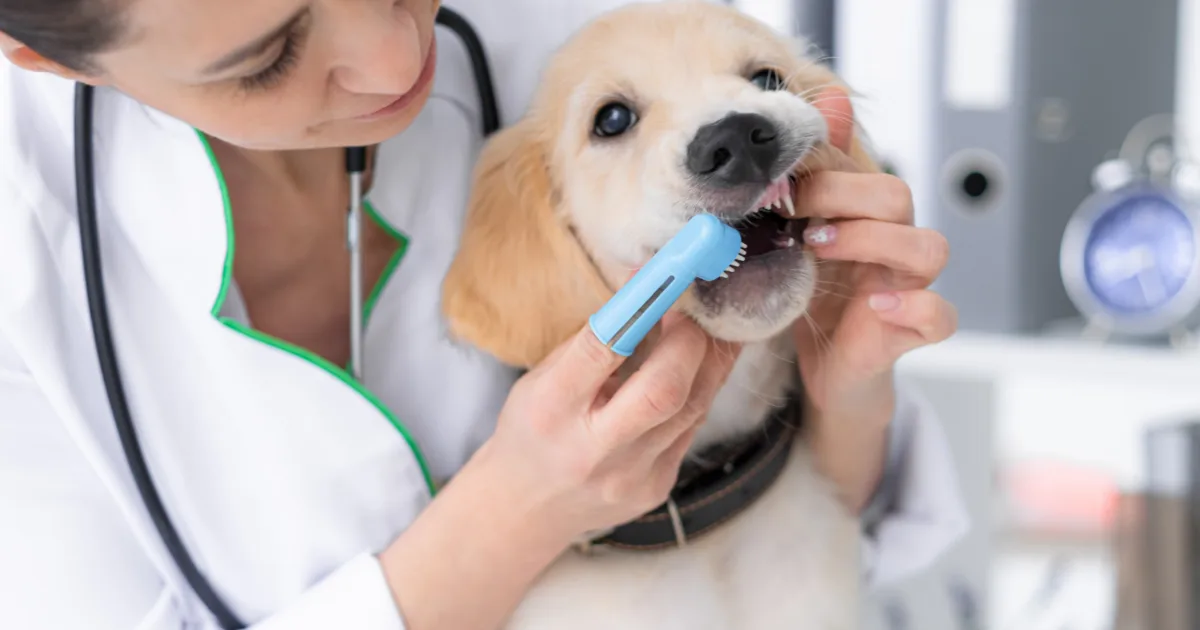

Would you go years without brushing your teeth? Many dogs go through life with little to no dental care at home, even in loving households where owners are doing everything else right. Why? It could be due to a busy lifestyle, lack of information, or a dog that really hates brushing their teeth.
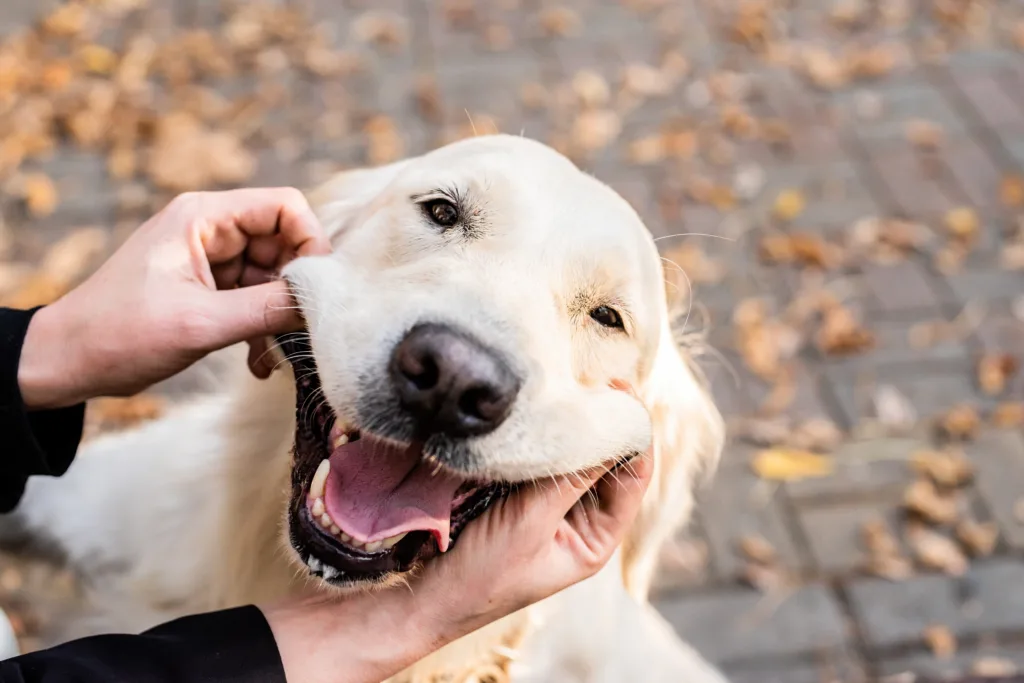
This blog covers what dog dental health actually means, how common dental disease is, how often vets recommend brushing, how to brush your dog’s teeth, when to see your vet, and how pet insurance may help if dental problems become unexpectedly expensive.
Why dog dental health matters
Dog dental health is not just about keeping your dog’s breath fresh. It is about preventing pain, infection, and the slow progression of disease that can affect a dog’s daily comfort.
Periodontal disease is the most common dental disease in dogs. It affects the support system of the tooth such as the gums, the root covering, the ligament that anchors the tooth, and the bone around the tooth.
Periodontal disease can lead to pain, infection, bone loss, and loose teeth. In more serious cases, problems such as abscesses, holes between the mouth and nose, or even jaw fractures are possible.
🚨 Severe dental disease may also cause bacteria from advanced oral infection to affect the heart, liver, and kidneys.
This is why periodontal disease is a significant health issue that can affect a dog’s comfort, ability to eat, and overall wellbeing.
Do dogs really need their teeth brushed?
Yes, absolutely! For most dogs, brushing is the most effective home-care method for controlling plaque.
Brushing physically removes plaque from the tooth surface and along the gumline before it hardens into tartar. Once tartar is in place, home brushing is much less effective at removing it. At that point, many dogs need a professional veterinary dental clean.
Many pet owners understandably ask whether dry food, bones, or dental chews are enough on their own. Generally, the answer is no:
- Regular dry food is not the same as active dental care.
- Dental chews can help, but they cannot fully replace brushing.
- Bones, though not toxic, may carry risks such as choking, broken teeth, or intestinal blockage.
- Dental health diets can support oral health, but brushing remains the best direct plaque control tool.
This doesn’t mean these products are useless. It means they work best as part of a broader plan rather than as a total substitute for brushing.
💡 You don’t need a perfect routine to make a meaningful difference. Daily brushing is the gold standard, but even a realistic, consistent routine can help reduce plaque build-up and support your dog’s comfort and long-term health.
How common is dental disease in dogs?
Very common. According to the Cornell University’s College of Veterinary Medicine, 80-90% of dogs over the age of 3 have signs of periodontal disease.
Here are a few reasons why it’s so widespread:
- Plaque forms quickly then hardens into tartar.
- Dogs do not naturally clean their teeth well enough on their own.
- Early disease is easy to miss.
- Many owners are not educated on how to brush or assume it’s an optional care routine.
- Some dogs are more prone to dental problems because of breed, age, or tooth crowding.
Small breeds are especially vulnerable because their mouths are compact, teeth may be crowded, and plaque can build up faster in tight spaces. Older dogs may have more advanced disease simply because the process has had more time to develop.
How often should you brush your dog’s teeth?
The ideal answer is once a day. But in real life, the best brushing routine is the one you will actually keep.
Predictability makes routines easier for both dogs and owners. For busy households, it helps to link brushing to something you already do every day, such as:
- After daily walks
- After dinner
- Before bedtime
Daily brushing is the goal because plaque forms every day, but every other day is still much more helpful than brushing only once in a while. At the minimum 2-3 times a week can also be worthwhile if you are building the habit or working with a dog who is still learning.
When should you start brushing?
The best time to start brushing your dog’s teeth is in puppyhood, because puppies usually adapt more easily to handling routines. If brushing becomes normal early on, it tends to stay easier throughout life.
Adult and senior dogs can also learn new routines with patience, especially if you take a gradual approach and make the process positive. The main difference is that older dogs may need more time to train and accept mouth handling.
🚨 If there is already pain in the mouth, brushing may need to wait until a vet has assessed the problem.
A lot of owners stop before they start because they think the routine has to be perfect. But a good real-life dental routine may also be:
- brushing every other day
- adding a dental chew or dental health support product
- asking the vet to check the mouth during routine visits
What you need to brush your dog’s teeth
- Dog-specific toothbrush
The dog toothbrush should be the appropriate size for your dog. While a finger brush can feel less intimidating for some dogs, especially in the early stages, a small soft dog toothbrush can provide a bit more reach and control.
- Dog-safe toothpaste
Dog toothpaste is designed for pets and usually comes in flavours they find more acceptable. These veterinary pastes contain enzymes that break down plaque. Human toothpaste should never be used on dogs because it is not meant to be swallowed, and some ingredients can be harmful.
- Treats or rewards
A dental dog chew treat can enhance their hygiene when used together with the dog’s brushing routine. It creates a reward system for canines when they’re calm and cooperative during brushing.
A simple step-by-step brushing routine
The mistake many pet-owners make is trying to brush the whole mouth on day one. A better approach is to treat tooth brushing like any other training task. Take small steps, do calm repetitions, and provide generous rewards.
Step 1: Get your dog comfortable with mouth handling
Start by gently touching the muzzle and briefly lifting the lips. Keep it short and reward immediately. Do not try to open the mouth wide or hold your dog still for too long.
Step 2: Introduce the toothpaste
Put a small amount of dog toothpaste on your finger and let your dog taste it. This helps create a positive association before the brush appears.
Step 3: Rub a few teeth first
Use your finger, a bit of gauze, or a finger brush to rub a few outer teeth very gently. You do not need to get deep into the mouth at this stage.
Step 4: Introduce the toothbrush
Once your dog is relaxed with the earlier steps, add the toothbrush. Start with just a few teeth and stop before your dog gets frustrated.
Step 5: Focus on the outer surfaces
This is where plaque tends to build up and where your effort matters most. You do not need a perfect full-mouth clean, especially at first.
Step 6: Keep it short and positive
Praise your dog throughout and finish with a reward. Short, successful sessions work better than long, stressful ones. For many dogs, 1 minute for the whole mouth is a solid goal once they’re comfortable.
If your dog is struggling, try these adjustments:
- go back one step in the training process
- keep sessions shorter
- switch to a softer brush or gauze
- try a different toothpaste flavour
- use higher-value rewards
- practise at a calmer time of day
- stop before your dog becomes frustrated
❗Aggressive resistance to tooth brushing might actually be pain. If your dog suddenly pulls away, cries, snaps, drools excessively, or reacts strongly to mouth handling, a vet check is a smart next step.
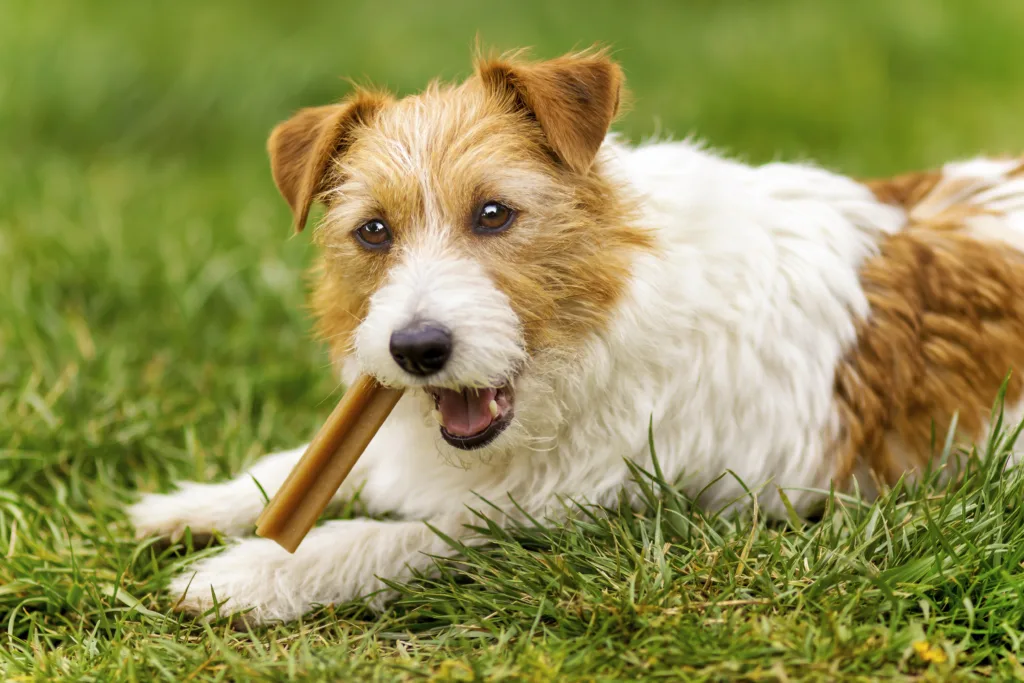
Temporary alternative options if brushing is not possible
Even though daily brushing is the ideal routine, partial care is better than no care at all. If your dog will not tolerate brushing yet, there are still useful ways to support oral health while you keep working on the habit.
Helpful options may include:
- VOHC-approved dental chews
- dental diets designed for oral health
- oral gels or rinses
- teeth-safe chew toys
These options can help reduce plaque build-up or support cleaner teeth. But these should only be seen as backup or support rather than complete replacements for brushing.
When to see the vet
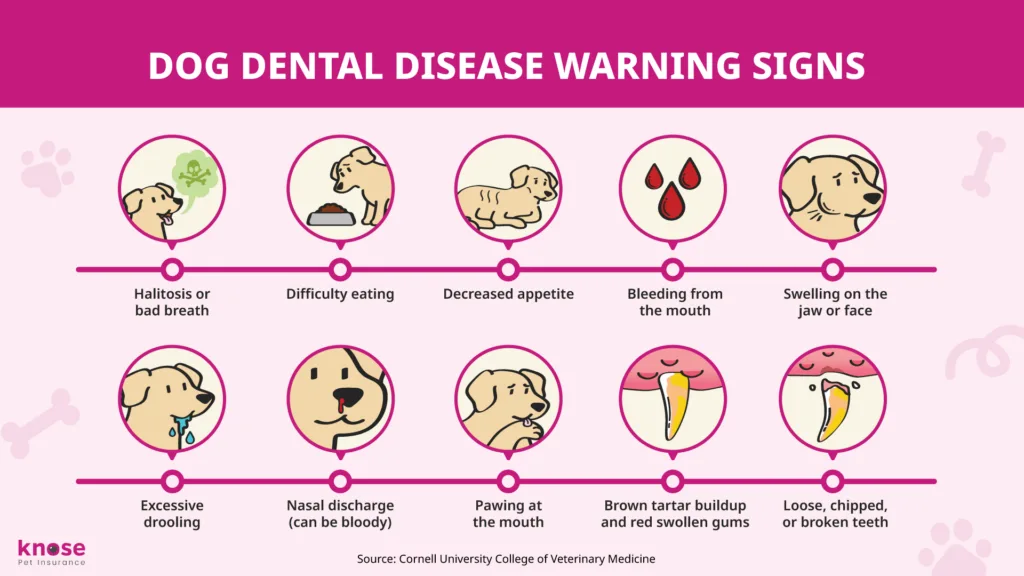
Dental issues can affect how a dog eats, chews, plays, sleeps, and behaves. Some dogs become quieter. Some drop food, chew on one side, or start avoiding hard treats and toys.
What happens during a professional dental clean?
A professional veterinary dental clean typically involves a full examination of the mouth under anaesthetic, cleaning above and below the gumline, assessment of damaged or loose teeth, and treatment where needed.
Perform a thorough oral examination
The veterinary team begins by examining your dog’s mouth to look for signs of dental disease, infection, damaged teeth, or other problems that may need treatment. They may also request for blood analyses and dental x-rays.
Place your dog under anaesthesia
Once your dog is safely under anaesthesia, the dental cleaning can be carried out thoroughly and safely, including below the gumline where disease often develops.
Remove plaque and tartar
Professional dental tools are used to remove plaque and tartar from the visible surfaces of the teeth and from below the gumline. This step is important because tartar under the gums can contribute to pain, infection, and periodontal disease.
Assess the teeth for damage
The vet checks for loose, broken, worn, or otherwise damaged teeth. If any teeth are causing pain or are too diseased to keep, extraction may be recommended.
Polish the teeth
After scaling, the teeth are polished to smooth the enamel surface. This helps reduce the chance of plaque attaching as easily in the future.
Rinse the mouth and apply protective care
The mouth is often thoroughly rinsed to remove debris. A protective dental product, such as a sealant, may also be applied to help support ongoing oral health.
How pet insurance may help with unexpected dental problems
Dental illness can become costly very quickly. For Australian pet owners, it’s worth knowing that standard pet insurance in Australia does not cover dental illness. As always, it’s important to check policy terms such as annual limits, exclusion periods, and benefit percentages so you understand exactly what is covered.
Knose offers Optional Benefits as an add-on to your insurance policy for eligible pets, which covers dental illnesses, behavioural conditions, and specialised therapies. Exclusion Periods and other Terms & Conditions apply.
Knose’s dental illness optional benefit particularly covers Veterinary Costs related to dental diseases, gingivitis, periodontal disease, and tumors or growths of the gums. Refer to the Product Disclosure Statement for more information regarding Policy inclusions and Exclusions.
FAQs
1. Do dogs really need their teeth brushed or can I give them dental chews instead?
Dog tooth brushing cannot be replaced by dental health products.
Dental chews can help reduce plaque and support oral health, but they don’t clean as thoroughly as brushing, especially along the gumline where disease often starts. Think of chews as a helpful extra rather than a full replacement for brushing.
2. How often should I brush my dog’s teeth?
Daily is ideal, because plaque builds up every day. If that is unrealistic, aim for every other day or at a minimum 2-3 times a week. A short, consistent routine is much better than only brushing occasionally.
3. Is it too late to start brushing an older dog’s teeth?
No. Puppies usually learn faster, but older dogs can still get used to tooth brushing with a gradual, positive approach. If your dog seems painful or strongly resists mouth handling, book a veterinary check first in case there is existing dental disease.
4. What should I use to brush my dog’s teeth?
Use a soft dog toothbrush, dog-safe toothpaste, and dental treats to reward good behavior. Never use human toothpaste, as dogs swallow toothpaste and some human ingredients can be unsafe for dogs.
5. When should I take my dog to the vet for a dental check?
Book a check if you notice bad breath, red or bleeding gums, yellow or brown tartar, drooling, pawing at the mouth, dropping food, loose teeth, or reluctance to eat. These can be signs that home care is not enough and your dog may need professional veterinary dental treatment.
