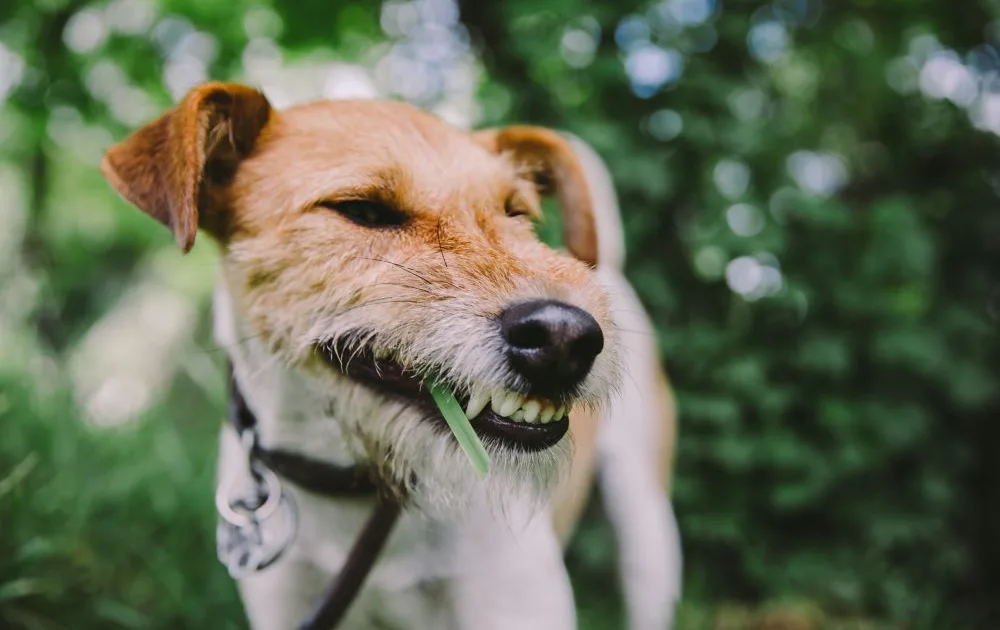

You take your dog for a walk in the park. You look away for just a second and suddenly your dog is happily munching on grass. While it may seem odd, the reassuring news is that eating grass is quite common in dogs, and in many cases it is not a sign of anything serious.
A dog that occasionally nibbles on clean grass and otherwise seems bright and energetic is very different from a dog that does this repeatedly then vomits, has diarrhoea, or seems lethargic.

This article breaks down why dogs eat grass, why some dogs eat dirt, when those behaviours may be normal, when they may point to a health or behavioural problem, and what owners can do about them.
Is it normal for dogs to eat grass or dirt?
Grass eating is often normal. Dirt eating is more concerning. This distinction matters because many owners lump the two together, even though they do not mean quite the same thing medically or behaviourally.
Research on animal behaviours found that 68% of the dogs eat plants on a daily or weekly basis, with grass being the most frequently eaten plant. In short, the study supports that plant eating in dogs is a normal dog behaviour.
However, dirt eating is a different story. It can reflect an underlying health or behavioural issue, like pica. Veterinary references define pica as the ingestion of non-nutritive items, which includes dirt. Studies on unusual dog eating habits describe dirt eating as having no physical benefit. So why do dogs do it?
Why do dogs eat grass?
There is no single answer that explains every dog. Grass eating can be normal, instinctive, sensory, digestive, or behavioural.
Grass eating as normal dog behaviour
Eating grass is usually normal dog behaviour. This does not make grass a dog food, but it suggests that there’s no need for a medical explanation. Owners may feel alarmed because the behaviour looks odd, but “odd-looking” and “abnormal” are not the same thing.
💡 Vet tip: If you think there’s something wrong with your dog, keep record of your observations and let your vet know.
Canine instincts
Another plausible explanation is that grass eating is partly instinctive. Wild dogs balance their diet by not only eating protein from animals, but also plant matter. That ancestral dog behaviour helps explain why domestic dogs on complete commercial diets may still show interest in grass.
Boredom, anxiety, or habit
Veterinary dog behaviour guidelines note that dogs with insufficient stimulation or excessive confinement may learn to ingest inappropriate materials.
That does not mean every dog chewing grass is emotionally distressed. It means that in some dogs, especially those who do it frequently when under-stimulated or neglected, the behaviour may be reinforced as a way to pass time, self-soothe, or seek attention.
Nutritional gaps or digestive discomfort
Grass eating is sometimes linked to nutritional deficiencies or digestive aids, but veterinarians have reported this to be a myth. This means grass eating can sometimes accompany nausea or digestive discomfort, but it is not, by itself, strong evidence that a dog feels sick or is missing nutrients.
💡 What matters more is the context: if grass eating happens alongside lip licking, vomiting, diarrhoea, decreased appetite, abdominal pain, or weight loss, it’s time for a vet checkup.

My dog eats dirt – is that a sign of pica?
Pica is defined as the repeated ingesting of non-food or non-nutritive items. These can include dirt, rocks, paper, plastic, wood, string, and similar materials. Grass eating is common in healthy dogs too, but repeated ingestion of dirt or other non-food items is more likely to signal that something needs attention.
❗This is an important distinction because pica is more clinically significant than occasional grass eating.
Pica is potentially harmful and may be associated with underlying health problems, nutritional imbalance, gastrointestinal disease, or behavioural issues. It is considered an abnormal ingestive behaviour that can reflect compulsive tendencies or insufficient stimulation.
🐶 In puppies, some chewing of dirt and other items may be part of normal exploration.
What are the risks of dogs eating grass or dirt?
There are some risks to dogs eating grass–not because grass itself is toxic, but because of what may be mixed into it.
Allergies
Grass eating can expose dogs to allergic reactions or irritation around their mouth and paws. Ingesting too much grass can also cause stomach problems. If you notice itching, redness, or excessive paw-licking after being in contact with grass, take note of it for your next vet visit.
Parasites
Grass mixed with dirt can contain parasite eggs and infect dogs with intestinal parasites. Lethargic dogs with diarrhoea, weight loss, vomiting, or distended stomachs are usually diagnosed by the vet through faecal testing.
Herbicides or toxic chemicals
Public or unknown lawns may have been treated with herbicides or other chemicals. When vegetation is treated correctly it’s not typically hazardous. However, herbicide poisoning issues in dogs are usually associated with excessive exposure or improper use.
Ingesting foreign materials
Repeated dirt eating increases the chance that a dog will swallow stones, mulch, sticks, or other debris mixed into soil. When that happens, gastrointestinal obstruction in dogs can be an emergency condition commonly associated with pain, vomiting, and diarrhoea.
When should you call your vet?
Observe your dog when the behaviour becomes persistent, when the dog is eating dirt or foreign materials, or when other symptoms appear.
Contact a veterinarian promptly if your dog has repeated vomiting, diarrhoea, lethargy, reduced appetite, abdominal pain, straining to pass stool, or ongoing consumption of dirt or other non-food items.
💡Knose supports Aussie pet owners by offering members access to a 24/7 pet health hotline where they can contact a registered vet nurse whenever they have pet health concerns.
Flowchart
Unsure whether your dog’s behaviour is harmless or worth a vet visit? This flowchart can help you tell the difference between normal grass nibbling and more concerning behaviour.

How to stop your dog from eating grass or dirt
- Ensure your dog has a balanced diet
Provide your dog with a complete and balanced diet that provides the vitamins, minerals, and nutrients they need to support overall health and a strong immune system. If you are concerned about possible nutritional gaps, your vet can help assess whether your dog’s diet is appropriate for their age, size, and health needs.
- Increase enrichment and stimulation
Inappropriate eating behaviours can be linked to insufficient stimulation, boredom, or low mental engagement. More structured walks, scent games, puzzle feeders, training sessions, and supervised outdoor time can all help reduce grass or dirt eating that’s driven by under-stimulation.
- Manage access to grass and dirt
Avoid lawns that may have chemically treated grass. Supervise dogs that target dirt in the garden, and use reward-based redirection rather than chasing or punishing the dog. When pica is suspected, prevention matters because the physical risks of swallowing the wrong object can be alarming.
Does Knose cover eating issues in dogs?
Knose Pet Insurance covers the following relevant health issues (subject to Terms & Conditions of the Policy – refer to the Product Disclosure Statement for more information):
- Gastrointestinal problems (medical)
- Foreign Body Ingestion (provided it is not a Pre-Existing Symptom & Condition)
- Poisoning
- Optional Benefits: Behavioural Conditions, Specialised Therapies, Dental Illness
