

If your dog has been pawing at its ear all week or you’ve just walked out of the vet clinic for an ear infection treatment, you’re not alone.
Canine ear infections are so common that vet research estimates they account for one in seven of all dog cases seen in general vet practice. According to Knose data, ear infections were the third-most-claimed dog condition in 2025.
3rd
Most claimed condition for dogs (Knose 2025 data)
$124 – $329
Typical vet bill (common range)
$7,500
Highest single ear infection claim
Part of what makes ear infections so frustrating is how unpredictable the cost can be. This article explains what dog ear infections are, why they’re so common, and the cost of treatment in Australia.
What is a Dog Ear Infection?
A dog ear infection, or as vets call it, otitis, happens when the skin lining the ear canal becomes inflamed. Most of these cases are otitis externa, which affects the outer ear canal. If this is left untreated, the inflammation/infection can spread deeper into the middle ear or inner ear, which are both harder and more expensive to treat.
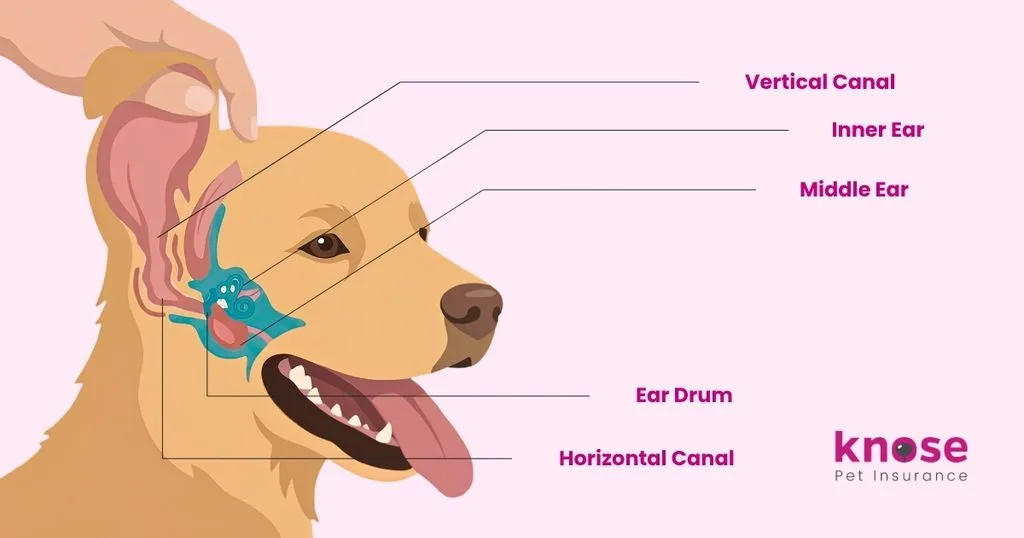
Although healthy dogs can often clear out dirt from their ear canal, the structure of a dog’s ear can still make them prone to infections. Since debris has to work its way upwards and out, if there is any blockage or inflammation from moisture, allergies, or wax build-up, bacteria and yeast can multiply and cause infection.
Common signs of canine ear infection
Ear infections can be itchy, painful, and cause discomfort. If you spot any of the signs outlined below, it’s worth booking a vet visit rather than waiting it out.
- Head shaking
- Pawing at the ears
- Foul odour
- Skin redness
- Yellowish or black discharge
- Scaly or thickened skin
Many dog ear infections can be caused by bacteria, parasites, foreign objects, skin disorders, or allergies. They can also be triggered or exacerbated by exposure to the elements or trapped moisture from water-based activities.
💡Dog’s ear infections tend to keep recurring unless the underlying cause is identified and fully addressed.
How are ear infections treated at the vet?
Most vets follow a general process for treating ear infections, though what’s actually needed for treatment depends on the case.
Examination
Your vet looks into the ear canal to see how far the infection has spread and check that your dog’s ear structure is intact, since this affects which treatments are safe to use.
Testing
A discharge swab sample is often tested to confirm whether bacteria, yeast, or ear mites are behind it. Small numbers of these microbes may be normal in every ear, but the problem starts when they overgrow.
Treating the wrong cause, or skipping this test, is one of the reasons some infections don’t clear up.
Professional ear cleaning
Any debris, wax, and discharge are cleaned out, and fur around or inside the canal may be trimmed for better access. A clean canal helps medication coat the full ear and work properly, and clears away debris that may harbour organisms and prevent medication working effectively.
Sedation or anaesthesia (if necessary)
If the case is more complicated, some dogs may need light sedation for a proper deep clean, especially if the ear is too sore or inflamed to manage while awake.
Medication
Most dogs are sent home with ear drops that are antibiotic, antifungal, and/or anti-inflammatory. For chronic infections, or in cases where the infection reaches deeper into the ear, they may also need tablets or an injection.
Follow-up check
Your vet will usually want to see your dog again, often with repeat swab tests, to confirm the infection has actually cleared before stopping treatment. Skipping this step is one of the more common reasons infections come back.

At-risk breeds for ear infections
According to Knose data, ear infections are the single most commonly claimed condition for three much-loved Australian breeds:
- Cavoodles
- Labrador Retrievers
- Cavalier King Charles Spaniels
While ear infections can affect any dog regardless of age or breed, they are more likely to occur in long-eared dogs. Floppy ears and hair-covered ear canals tend to trap moisture and restrict airflow, creating the warm, damp environment bacteria and yeast need to thrive.
💡None of this means these breeds are a bad choice; it just means their owners should be familiar with keeping dog ears clean.
Seasonal Spikes in Ear Infections
Pet insurance claims also spike during the seasonal transition months. Sydney’s Turramurra Veterinary Hospital points to spring and summer heat and humidity as a major trigger, while Port Road Vet notes that pollen-driven skin allergies, common across Australia over the same months, may show up in the ears first.
Both triggers come down to the same basic problem. Heat and humidity keep the ear canal moist for longer than usual. For dogs that are allergic, the irritated skin gives bacteria and yeast an easier way to pass through the ear’s normal defences. The season for swimming and more frequent bathing increases the risk too.
Tips for Dogs Who Love to Swim
As dogs have an L-shaped ear canal, water that gets trapped inside doesn’t drain out as easily on its own. A few habits make a real difference to prevent ear infection for dogs that enjoy the water:
- Dry ears thoroughly after every swim or bath. Use a soft absorbent cloth and gently wipe the inside visible surface of the ear. Leaving ears to air dry gives moisture more time to sit in the ear canal.
- Check ears weekly, especially over summer. Watch for any tenderness, discharge, redness, or odour so problems are caught early.
- Be mindful of where your dog swims. Avoid stagnant water, like ponds or puddles, as they tend to carry more bacteria than a clean pool or flowing water.
- Ask your vet about extra protection for at-risk dogs. Options like snug ear wraps or a regular drying routine can help higher-risk dogs that swim often or have had ear infections before.
💡This doesn’t mean you should keep a water-loving dog out of the ocean. A quick dry-off afterwards is a small habit that can head off a much bigger vet bill.
Real Cost of Ear Infections
Many ear infections can play out like the typical case below. But Knose’s 2025 claims data also includes the other end of the scale: a single dog whose ear infection claim reached $7,500, the highest recorded for this condition that year.
| Vet cost (invoice) | Knose paid (benefit) | Covered | |
| Typical case (median) | $211 | $147 | 68%* |
| Most severe case (maximum) | $7,500 | $6,253 | 83%** |
**This 83% reflects the benefit paid on that specific claim.
In that most severe case, the pet insurance cover was the difference between a $7,500 bill and a $1,247 out-of-pocket cost.
How Pet Insurance Can Help
Knose can help pay eligible vet costs for illnesses like ear infections, subject to your policy’s terms and conditions. This means that if your dog’s ear infection turns into something more than a quick clean-and-drops visit, you’re making treatment decisions with your vet, not around your bank balance.
Having pet insurance cover doesn’t stop the ear infection from happening, but it does mean a bad flare-up, a vet specialist referral, or an emergency surgery doesn’t also become a financial emergency.
Ear infections are one of the most common reasons Australian dogs see the vet, and the cost is higher and more variable than most owners expect, especially once a case turns chronic.
Knose helps you have a plan in place for the vet bill before you receive one. We can support pet owners with both financial cover and a 24/7 pet health hotline.
Frequently Asked Questions
1. How do you know if your dog has an ear infection?
Watch out for head shaking, scratching at the ear, redness or swelling, an unpleasant smell, and dark or waxy discharge. If you notice any of these, it is recommended to book a vet visit.
2. How much does a dog ear infection cost to treat in Australia?
According to Knose 2025 claims data, the cost range sits between $124 and $329. However, complex cases can run into the thousands, with the most severe case costing well over $7,000.
3. Why do dogs get ear infections so often?
Dog ear canals are deep and curved, which makes it easy for moisture, wax and debris to build up. Skin allergies are a very common cause or co-factor. Outdoor activities, environmental factors, and having long ears can also affect the risk of contracting an ear infection.
4. Can I treat my dog’s ear infection at home?
It’s best to consult a professional. While mild cases may respond to vet-approved medications, other infections may need proper diagnosis first. The wrong treatment can make things worse and delay recovery so it’s best to get it checked rather than guess.
5. Does pet insurance cover ear infections?
Knose can help cover eligible vet costs for illnesses like ear infections, subject to your policy’s terms, conditions, exclusion periods, and any applicable limits or excess.
