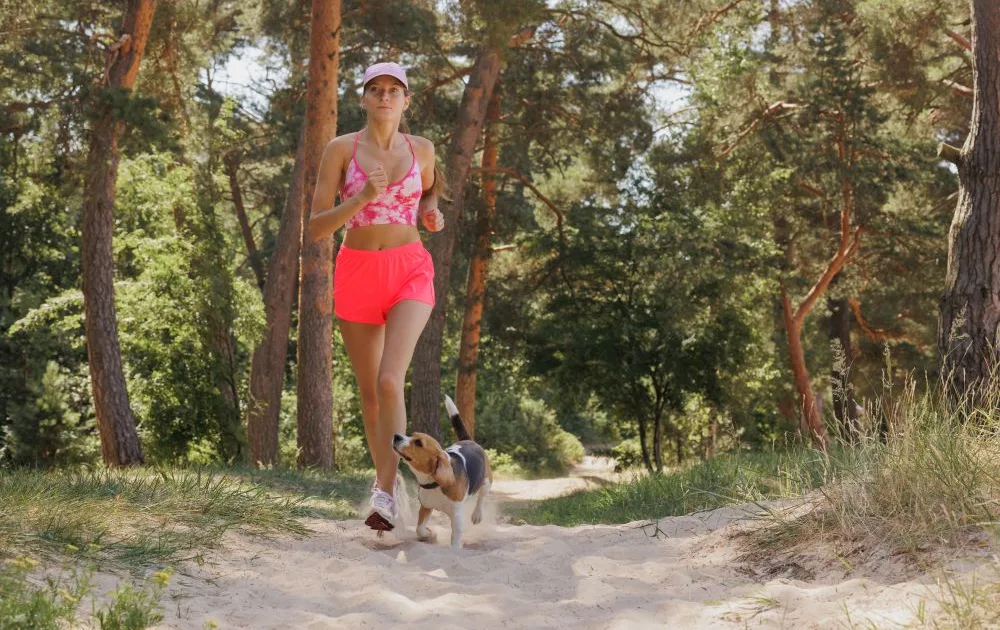

There’s a special kind of joy in hitting a bush track with your dog by your side. But even the calmest pup can turn a quiet path into chaos. There are rules worth knowing before you lace up, or you might find yourself dragged into the scrub by an overexcited running partner!

A few pieces of gear can make the experience safer for you and your dog. Tools like PawHealthAI monitor your dog’s activity, vital signs, and provide health reminders. This way, you can enjoy the trail stress-free.
As you get ready to head out, let’s discuss the dos and don’ts of running with your dog so your trail time is more high-five moments than face-plants.
Trail rules: know before you go
Make sure your dog is physically ready for running or trekking before you plan your adventure.
Not every trail is open to dogs, especially in many national parks across Australia, where restrictions help protect local wildlife. Native animals have already faced significant pressure from introduced predators. Even a calm and well-trained dog can unintentionally leave scent, cause stress, or disturb sensitive species like ground-nesting birds.
Local reserves and state forests tend to be more permissive, but you’ll still find on-leash requirements across most of them. The safest move is to check the relevant land management authority’s website before you go.
Parks Victoria, NSW National Parks, and Queensland Parks and Wildlife Service are just some who publish clear dog access guidelines online. A quick check before you head out helps you avoid any surprises and keeps your run smooth from start to finish.
Australia has plenty of dog-friendly trails, from scenic coastal walks to bush tracks. Many of these trails welcome dogs to roam freely.
Leash set up for trail runs
Getting your leash set up right helps with how comfortable and controlled your runs feel, for both you and your dog. Make sure your dog is trained to stay calm on the leash, so sudden tugs or changes in pace don’t spook them. With a few adjustments, what could feel like a tug-of-war turns into a smooth, effortless run.
Go hands-free with a waist belt
A canicross-style waist belt keeps your hands free and your posture natural while running. It also spreads any pulling force across your core instead of your arms, which feels much more stable on uneven trails.
Use a bungee leash
A bungee or shock-absorbing leash helps soften sudden pulls or changes in pace. This is most useful on trails where terrain can shift quickly. It gives both you and your dog a bit more buffer.
Choose a harness, not a collar
Running on a harness is far safer and more comfortable than attaching a leash to a collar. It reduces strain on your dog’s neck and allows them to move more naturally, especially during longer runs.
Keep the length just right
A leash that is too short can feel restrictive, while one that is too long can get tangled on narrow paths. Aim for a length that gives your dog space to move while still keeping them close and under control.

Trail hazards: what’s actually out there?
Australian bush tracks carry a specific set of risks that urban parks don’t prepare you for. Wildlife, terrain, heat, and a handful of plant and ground hazards can all catch you off-guard if you’re not familiar with them. Here’s what to watch for:
Wildlife
Eastern browns, tiger snakes, and red-bellied blacks are all worth keeping in mind, depending on where you’re running. Stick to the centre of the trail where you can and keep your dog close. Snakes generally won’t come looking for trouble, but a curious dog off-leash in long grass is a different story. Bring a pet first-aid kit with you at all times.
Heat
Dogs cool themselves by panting, which is far less efficient than sweating. On a 28-degree day with full sun, a dog can overheat quickly. Early morning is the smart window for summer runs. If you’re running in the middle of the day and your dog’s pace drops or panting becomes laboured, that’s your cue to stop.
Paw hazards
Loose rocks, sharp gravel, dry cracked clay, burrs, and grass seeds are all common on Australian tracks. Certain grasses can work seeds through the skin between toes, which is as unpleasant as it sounds. Check between your dog’s paws after every run. Some owners use paw balm to keep the skin supple, others opt for booties on particularly rough ground.
Uneven surfaces
Dogs are generally sure-footed, but a nasty landing on a loose rock can strain a leg just as it can yours. Keep an eye on how your dog handles the terrain, particularly on steep descents. Make sure vaccinations are up to date to protect from any infections they could pick up along the trail.
Trail etiquette
Trail running thrives on a culture of mutual respect and a shared love for the outdoors, but maintaining that “relaxed” atmosphere requires everyone to follow a common code of conduct.
The most important thing on the trail is knowing the flow of traffic. On narrow singletracks, step aside for hikers and keep your dog close when passing. Not everyone feels comfortable around dogs, and a glance at someone’s body language will let you know if your dog’s excitement is welcome.
When you’re grinding out an uphill climb, remember to yield to the runners coming down. Their momentum is much harder to break. Giving them space keeps the trail safe for everyone.
Nature provides high-stakes distractions, and if your dog spots something interesting, instinct can override their training in an instant. If your dog’s recall isn’t perfected for high-distraction environments, the safest and most polite choice is to keep them on a leash.
Finally, the “Leave No Trace” principle is non-negotiable for keeping trails open and pristine. This means you must pack out all waste, including pet waste. Simply burying it off-trail or tossing it into the brush is insufficient and damaging to the local ecosystem. Always carry enough waste bags so you can transport everything back to a proper bin.
Your dog’s trail running safety checklist
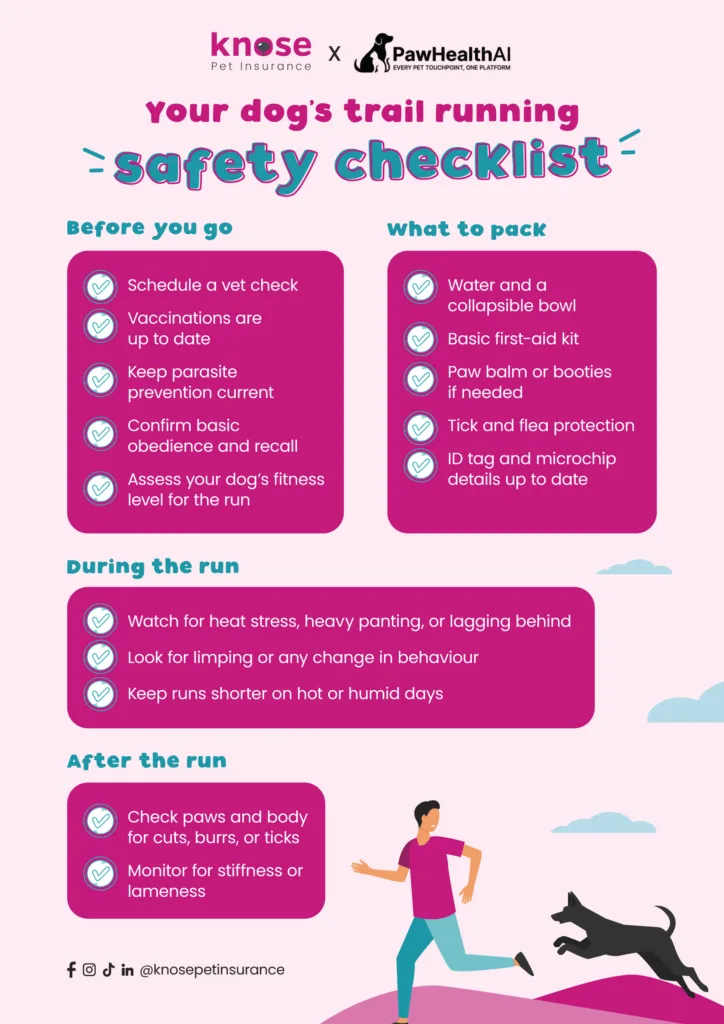
Running with your dog is full of surprises, where a quiet path can suddenly turn into a sprint or a wildlife encounter. Staying sharp and present helps you handle every rocky twist and muddy turn with confidence.
This year, turn those runs into a shared celebration. This National Trail Run With Your Dog Day on May 2nd, 2026, PawHealthAI is inviting dog owners across Australia. It’s a free, virtual event. Wherever you are and whatever trail you love, you can take part. Simply download the PawHealthAI app, set up a profile for your dog, and on the day, complete and share a Paws and Reflect check-in to enter the Grand Prize lucky draw.
The event is proudly supported by Knose, the Official Pet Insurance Partner of National Trail Run With Your Dog Day.
Visit the official site to download the app and learn more!
https://www.trailrunwithyourdogday.com
Knose Prize Terms & Conditions
The Knose Prize includes:
• 1 x Pet First Aid Kit (valued at $60)
• Up to $500 credit towards a new Knose Pet Insurance policy
The $500 credit will be applied to a new policy and used towards monthly premiums until exhausted, the policy is cancelled, or 12 months from policy start—whichever occurs first.
Offer is available to new Knose Pet Insurance customers who are Australian residents only. The policy must be taken out in the winner’s name for a pet residing in Australia.
The winner must apply for a policy by 1 September 2026, otherwise the prize will be forfeited.
The Pet First Aid Kit will be provided regardless of whether a policy is purchased.
The prize is not transferable or redeemable for cash.
Eligibility for cover is subject to the full policy terms, conditions, limits, and exclusions (including pre-existing conditions).
